
You and Peptides Research · ~10 min read
The Peptide Renaissance
A strategic briefing on therapeutic peptides
Executive summary
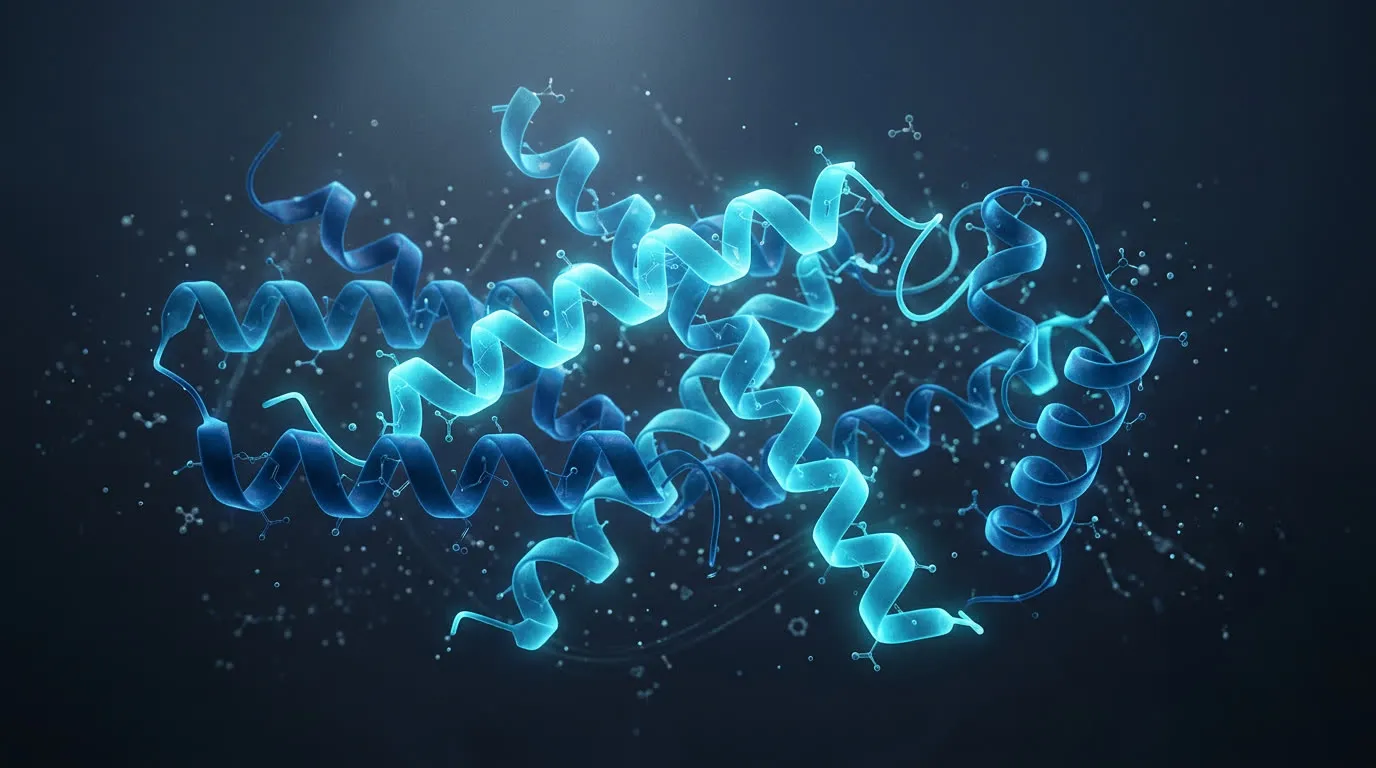
Therapeutic peptides — short chains of amino acids that act like biological "telegrams" telling cells what to do — have become one of the fastest-moving corners of medicine. Industry forecasts put the global peptide market on a path to roughly $294 billion by 2033, up from about $140 billion in 2025.
The field today is split in two. The approved frontier (GLP-1 receptor agonists like semaglutide and tirzepatide) has transformed how doctors treat type 2 diabetes and obesity. The experimental gray market (BPC-157, CJC-1295, and similar) has surged in popularity through wellness communities even though most of these peptides lack human clinical-trial data and are now banned from compounding.
1. From hand-carving to assembly lines
Peptides occupy the sweet spot between small-molecule drugs (like ibuprofen) and large biologics (like monoclonal antibodies). Their short length makes them precise binders for cellular receptors, and their natural building blocks mean their breakdown products are non-toxic.
Before the 1960s, building a peptide was painfully slow — every amino acid added to the chain required separate purification, so a complex sequence could take years. In 1963 R. Bruce Merrifield introduced Solid Phase Peptide Synthesis (SPPS): the chain is anchored to a bead of resin so excess reagents can be rinsed off after each step. Reaction efficiency jumped to ~99.5% per step, and timelines collapsed from years to days. Every modern peptide drug is downstream of this one breakthrough.
2. The GLP-1 economy
GLP-1 (glucagon-like peptide-1) is a hormone your gut releases after a meal. Natural GLP-1 is destroyed by the enzyme DPP-4 in under two minutes — useless as a drug. Semaglutide attaches a fatty-acid tail that lets it ride along with serum albumin, extending its half-life to about a week. Tirzepatide adds a second receptor (GIP) and produces weight loss of around 20–25% in trials, versus ~15% for semaglutide alone.
The SNAC molecule (Salcaprozate Sodium) is what made oral GLP-1 (Rybelsus) possible. SNAC briefly raises local stomach pH, monomerizes the peptide, and fluidizes the gastric membrane — letting the drug slip across into the bloodstream before letting go and being cleared by the kidneys.
3. The regenerative frontier
BPC-157 is a 15-amino-acid peptide first identified in human gastric juice and marketed for tissue and gut healing through angiogenesis. Strong signals in rodent studies; human data is limited to small pilot trials.
Growth-hormone secretagogues like CJC-1295 and Ipamorelin nudge the pituitary to release growth hormone in its natural pulses rather than overriding it. The trade-off is hormonal: insulin resistance, joint pain, fluid retention, and a theoretical risk of accelerating tumor growth.
4. Why peptide safety is genuinely complicated
Peptide safety isn’t simple, and the familiar "natural means safe" instinct does not apply. Three distinct risk categories matter:
- Immunogenicity. Even tiny modifications can make the immune system flag a peptide as foreign and trigger anti-drug antibodies — anywhere from a rash to anaphylaxis.
- Contamination. Vials sold online as "research grade" have repeatedly been found to contain bacterial endotoxins, heavy metals, or wrong doses of the right molecule.
- Hormonal imbalance. Anything that boosts growth hormone, insulin, or other endocrine signals can over-correct — acromegaly, insulin resistance, and metabolic disruption are all documented.
5. The regulatory war
In 2023 the FDA placed 19 peptides on its "Category 2" list, effectively banning compounding pharmacies from producing them. The agency cited immunogenicity concerns and the absence of human clinical evidence; the technical trigger is that these molecules lack a USP monograph (a third-party-certified recipe).
HHS Secretary Robert F. Kennedy Jr. has framed the ban as an "illegal war on peptides," arguing the FDA should only act when there is a documented safety signal rather than acting preemptively on a lack of efficacy data. A pivotal moment is coming in 2026–2027, when the FDA Pharmacy Compounding Advisory Committee revisits the Bulks List that determines which peptides can legally be compounded.
6. AI design and the next generation
Generative AI is collapsing peptide discovery from years to months. AlphaFold3 and RFdiffusion predict 3D structures; ToxGIN and tAMPer screen for toxicity; HydrAMP and HelixGAN design novel sequences; ESM-2 and PepMLM use protein language models to generate context-aware candidates.
The frontier challenge is the metrics-reality gap: a peptide can look ideal in silico and still fail in a real human body. The newest "agentic" reasoning models (PepThink-R1, PRefLexOR) use chain-of-thought style reasoning so failures are traceable. On the delivery side, swallowable robotic capsules, transdermal patches, and blood-brain-barrier-crossing nanocarriers are all in active development.