
Examples people hear about—and what evidence usually looks like · ~6 min read
Therapeutic Map
From ghrelin mimics to neuroactive peptides: marketing runs ahead of human trials for many “research” compounds—Category 2 exists for a reason.
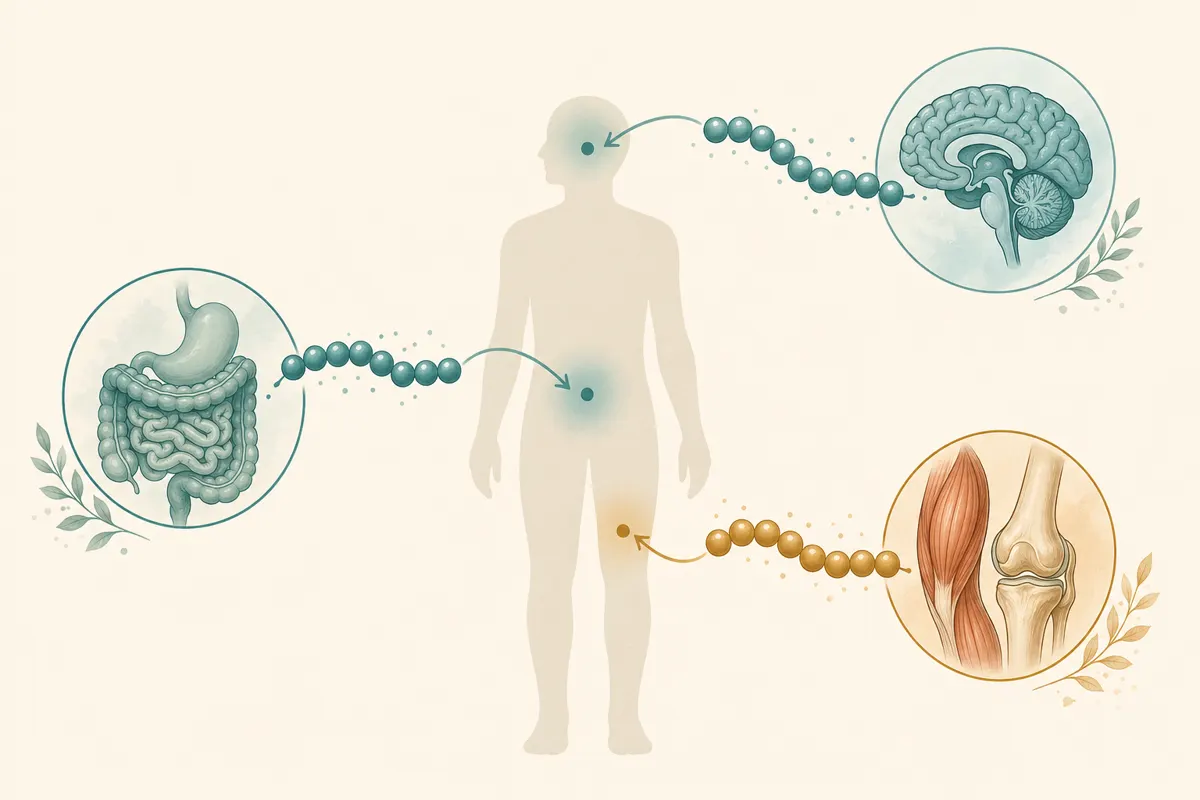
BPC-157 — the gastric-journey peptide
Rodent and small human pilot data do not equal an approved therapy.
BPC-157 is a 15-amino-acid fragment originally linked to gastric juice. Online markets promote tendon, gut, and recovery benefits. Peer-reviewed human trials at scale are thin; rodent work dominates. It sits on the FDA Category 2 bulk list for compounding—meaning licensed US compounders can’t legally produce it under current rules.
Growth-hormone secretagogues (e.g., CJC-1295 + ipamorelin)
They nudge the pituitary’s pulse rather than replacing GH outright—but endocrine nudges have real risks.
These combinations aim to amplify natural growth-hormone pulsatility instead of a flat synthetic GH flood. That sounds gentler, but hormone axes interact: fluid retention, joint pain, insulin sensitivity shifts, and theoretical concerns around proliferative tissues mean clinical oversight matters.
Neuroactive peptides (e.g., selank, semax)
Blood–brain crossing raises both opportunity and dependency/tolerance questions.
These molecules are studied for mood, focus, and recovery in research contexts. Evidence in humans is limited compared with online enthusiasm. Any compound that alters CNS signaling deserves respect for unknown long-term effects and interaction with psychiatric meds.