
AI design and smarter delivery · ~5 min read
Future Horizons
Models now predict structures and generate sequences; the hard part is still human biology—metabolism, immunity, and real-world variability.
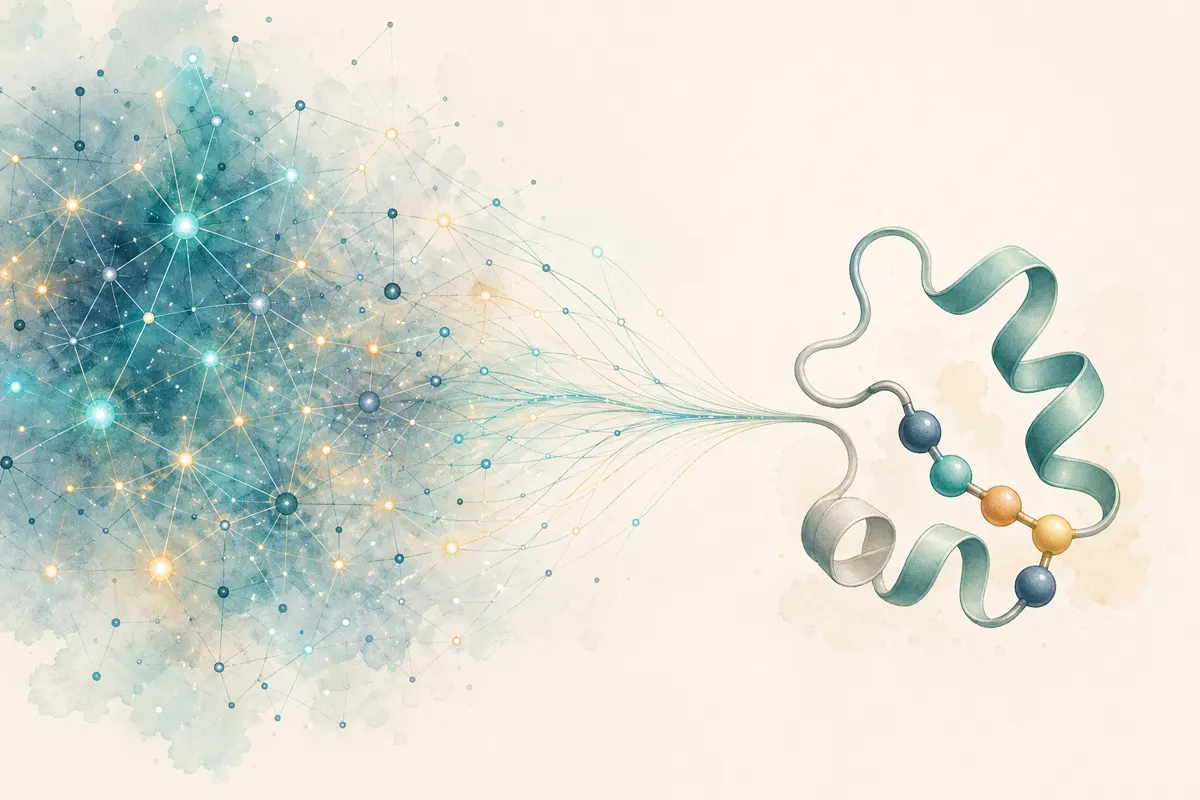
In silico speed vs. in vivo reality
AI collapses design cycles, but screens don’t yet replace living trials.
Structure predictors and generative models can propose sequences and shapes in days instead of years. Toxicity classifiers flag obvious liabilities early. The gap is everything the model wasn’t trained on: immune recognition, off-target tissues, drug–drug interactions, and long-term safety.
Where delivery is heading
Pills, patches, robotic capsules, and lipid carriers each attack a different bottleneck.
Beyond SNAC, teams pursue swallowable microneedle devices, transdermal patches for steadier levels, and nanocarriers aimed at barriers like the blood–brain barrier. None of these erase the need for clean manufacturing and honest clinical endpoints—they change which problems are hardest.