Why peptides used to mean needles · ~5 min read
Oral Peptides: How SNAC Cracked the Pill
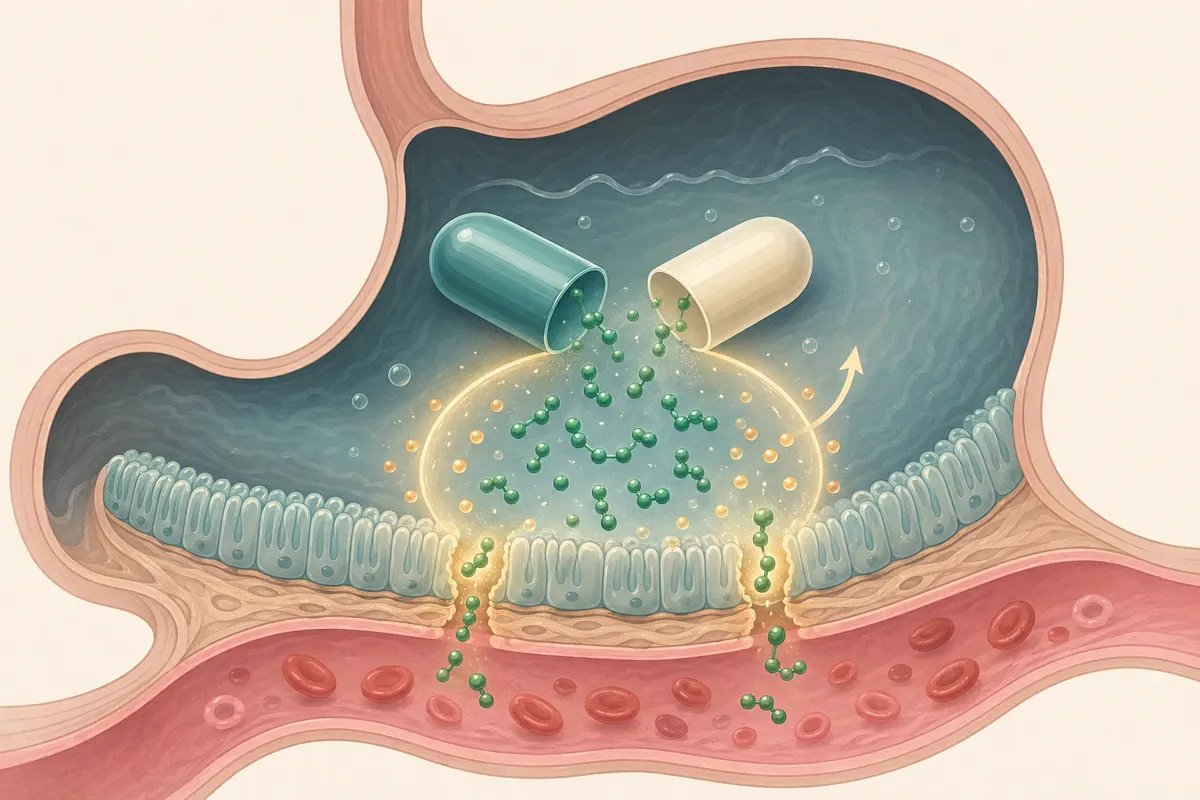
SNAC builds a temporary bubble around the drug in the stomach—raising local pH, separating peptide clumps, and softening the gut lining just enough for absorption.
The old rule: stomach vs. peptide
Acid and enzymes destroy most naked peptides before they reach the bloodstream.
For decades, “peptides can’t be pills” was treated as a law of nature. Pepsin and low pH shred unprotected chains; even survivors struggle to cross the gut wall as monomers. The breakthrough wasn’t a tougher peptide alone—it was a co-ingredient that changes the local environment long enough for absorption.
What SNAC does (plain English)
SNAC calms the stomach, pulls peptides apart, fluidizes the gut lining briefly, then lets go in blood.
Salcaprozate sodium (SNAC) raises local pH enough to quiet pepsin, breaks up peptide aggregates so single molecules can cross, embeds in stomach epithelial membranes to increase fluidity (studies cite on the order of ~40% at therapeutic concentrations), and then releases the peptide once systemic circulation dilutes the complex.
Why “1% absorbed” can still win
Oral semaglutide is ultra-potent and long-lived—tiny fractional absorption still stacks into a therapeutic effect.
Only about 0.4–1% of an oral semaglutide dose reaches the body. That sounds awful until you remember picomolar receptor affinity and a weekly elimination profile—the drug doesn’t need a high arrival rate if each molecule works hard and sticks around. The trade-off is strict dosing rules: empty stomach, small water sip, then a waiting window before food or other meds.