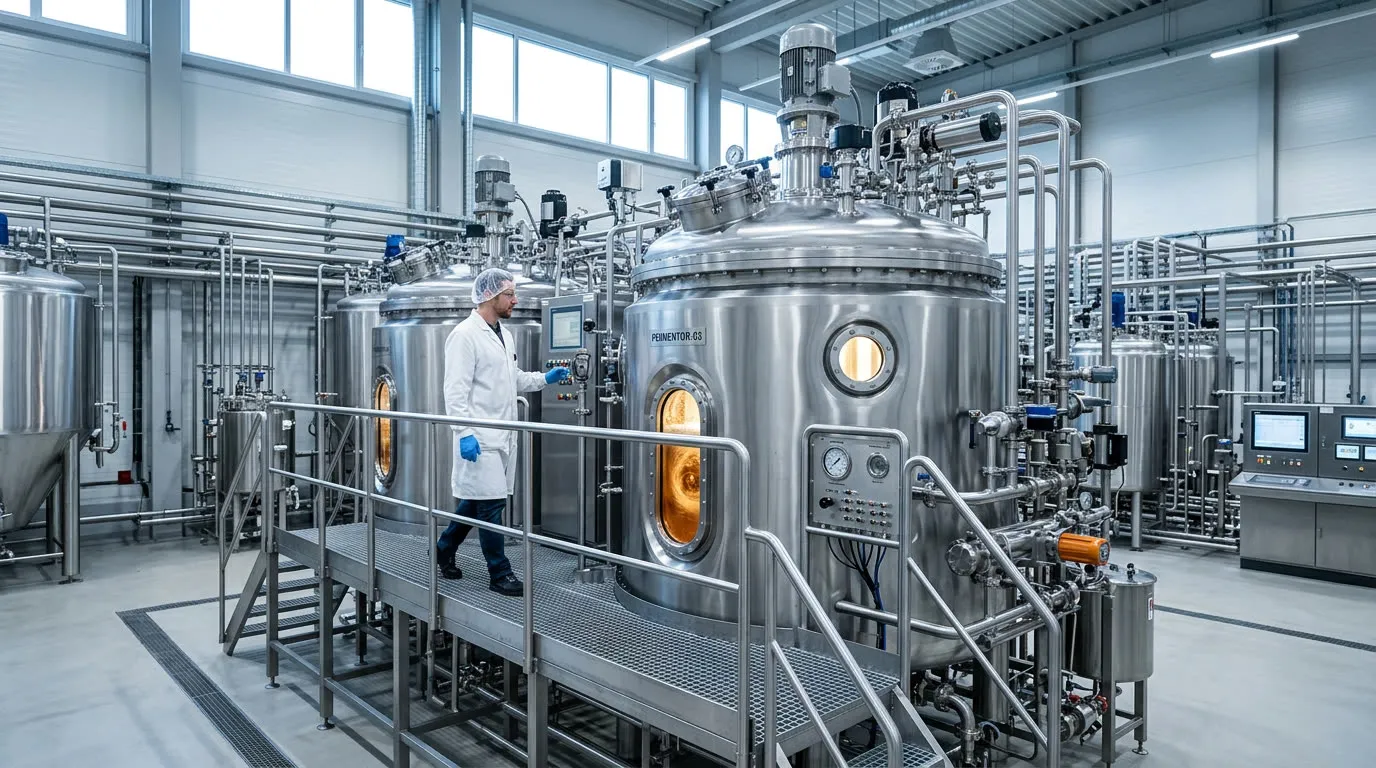
From lab discovery to modern manufacturing · ~5 min read
Evolution of Recovery
Insulin in 1922, solid-phase synthesis in 1963, recombinant insulin in 1982—each step removed a bottleneck so peptides could become real medicines at scale.
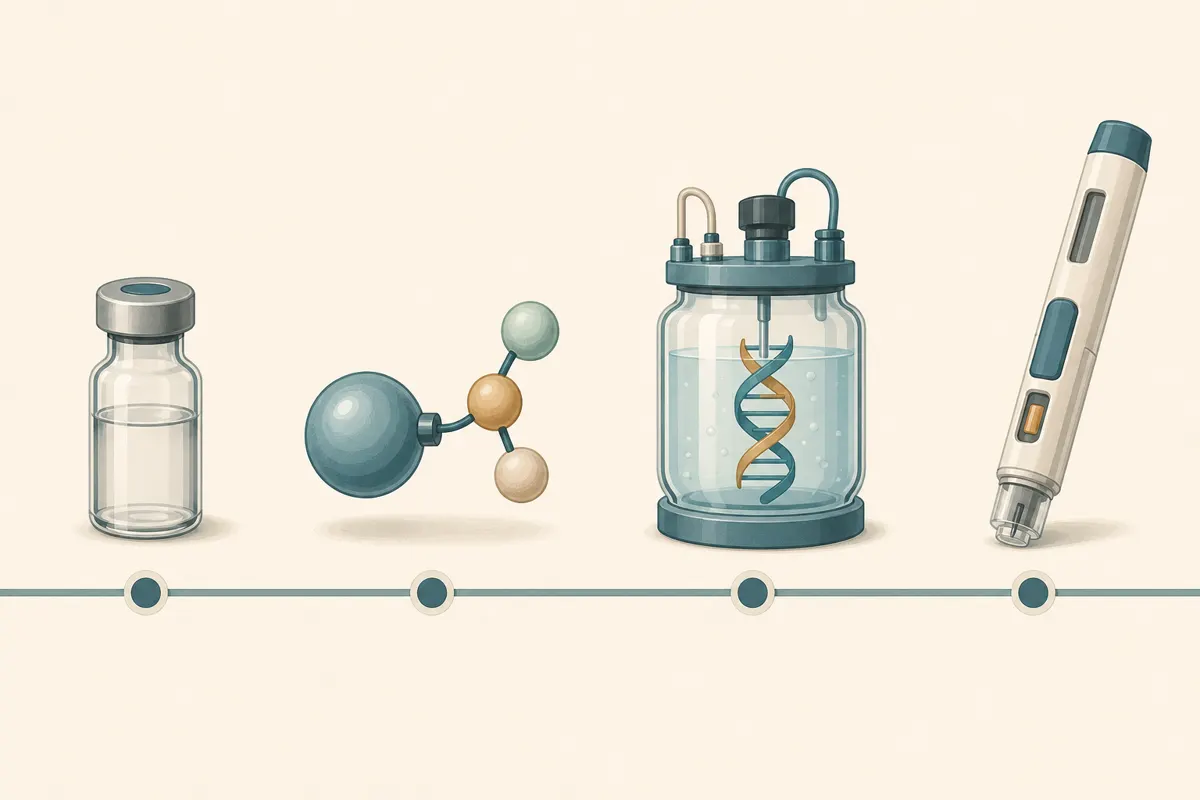
1922 — First proof that peptides can save lives
Insulin showed that a peptide extracted from tissue could replace a missing hormone.
Borrowing fuel from one engine to jump-start another—crude, but it worked.
Researchers extracted insulin from animal pancreas and gave it to people with type 1 diabetes. For the first time, a peptide wasn’t just a lab curiosity—it was a therapy. The molecule wasn’t human-identical, but it was close enough for receptors to respond.
1963 — Solid Phase Peptide Synthesis (SPPS)
Merrifield’s resin trick turned “years per chain” into “days per chain.”
Before SPPS, chemists purified after every single amino-acid addition—building a long peptide could take years. Merrifield anchored the growing chain to an insoluble bead so excess reagents could be rinsed away. Reaction efficiency per step jumped to roughly 99.5%, and timelines collapsed.
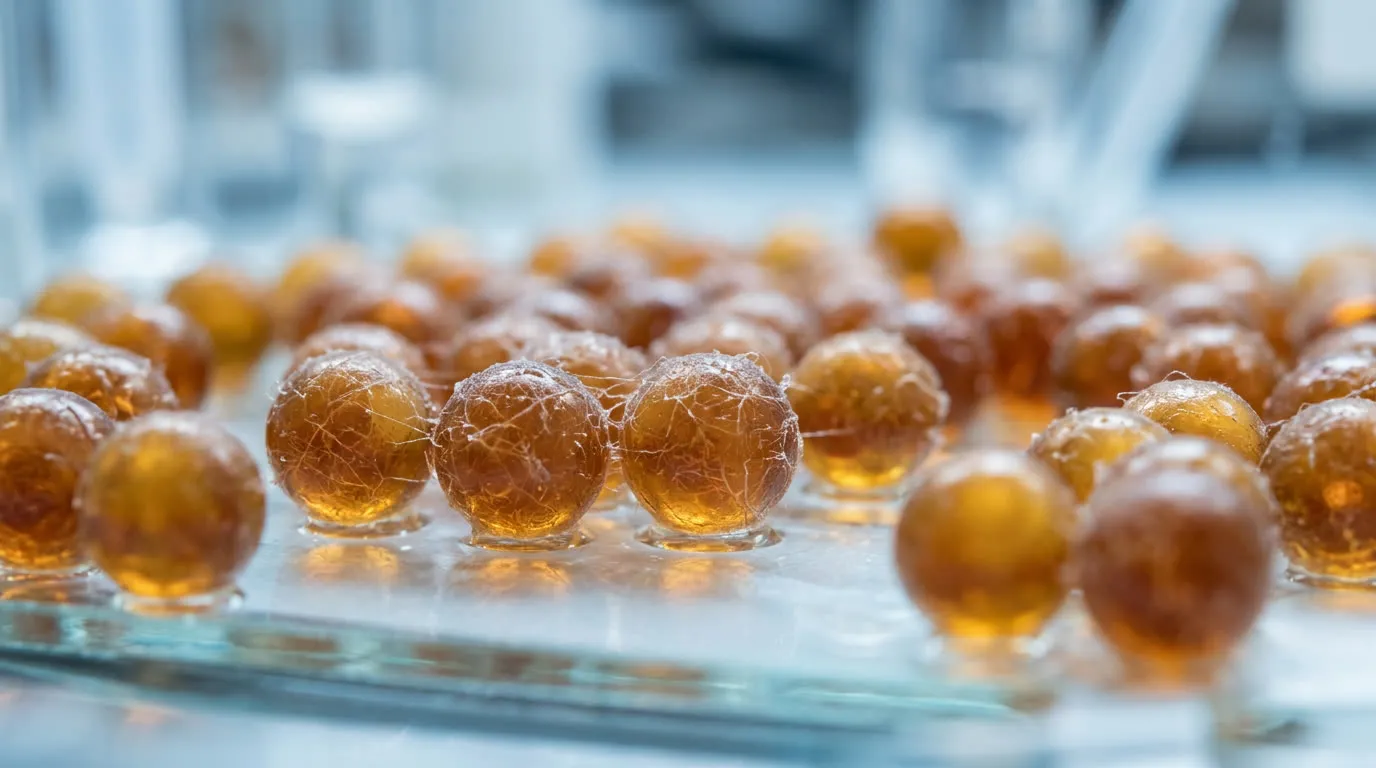
1982 — Recombinant DNA changes manufacturing
Biology became a factory: exact human sequences at industrial scale.
Genetically engineered bacteria and cells could now spell out human insulin (and later longer peptides) with perfect sequence control. That ended reliance on animal extracts for many products and set the template for today’s biotech pipelines.