
Why this class reshaped the peptide industry · ~5 min read
GLP-1 and the Metabolic Revolution
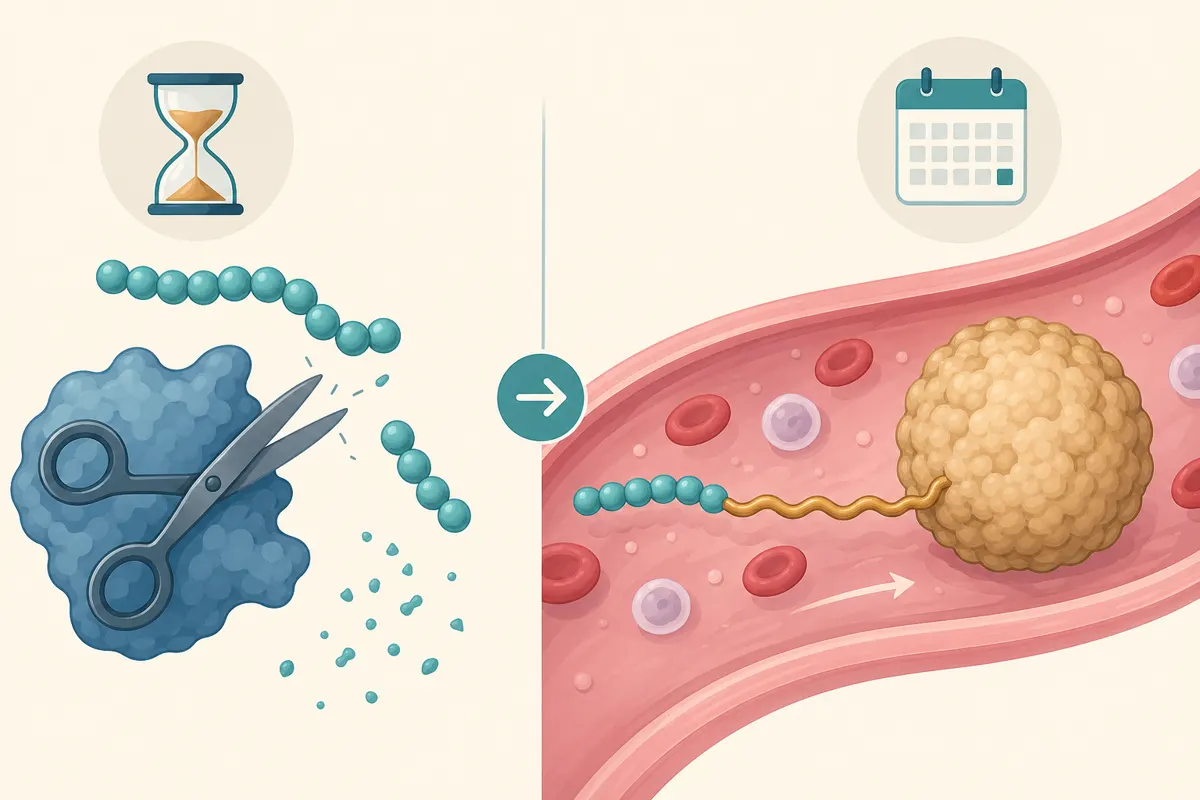
Natural GLP-1 vanishes in minutes; engineered GLP-1 drugs last days to weeks by cheating clearance and hitching a ride on albumin.
What GLP-1 does in the body
After a meal, GLP-1 nudges insulin release and fullness—the hormone your gut uses to coordinate fuel.
GLP-1 (glucagon-like peptide-1) is released from the gut when nutrients arrive. It helps the pancreas release insulin in a glucose-dependent way and signals satiety to the brain. Natural GLP-1 is fragile: an enzyme called DPP-4 clips it so fast that its half-life is under two minutes—fine for a burst signal, terrible for a once-weekly drug.
Engineering around two-minute clearance
Semaglutide extends life by albumin binding and sequence tweaks; tirzepatide adds a second receptor (GIP).
Semaglutide attaches a fatty-acid derivative so the drug binds blood albumin and clears slowly—half-life stretches to about a week. Tirzepatide activates both GLP-1 and GIP receptors, which in trials produced roughly 20–25% weight loss alongside glycemic benefits. Both illustrate the same theme: keep the message, redesign the delivery.
Why the whole peptide field cares
Commercial demand for GLP-1 drugs pulled investment into manufacturing, delivery, and the next wave of metabolic peptides.
Projections for the GLP-1 market run toward hundreds of billions of dollars by the early 2030s. That scale funds better chemistry, better devices, and oral-delivery research (including SNAC-based pills). Even if you never take one of these drugs, their success raised the ceiling for what peptide programs can aim at.