The core signaling science · ~4 min read
Peptides Decoded
Peptides are short chains of amino acids that act like precise messages between cells—small enough to engineer, specific enough to target one receptor.
What a peptide is (in one breath)
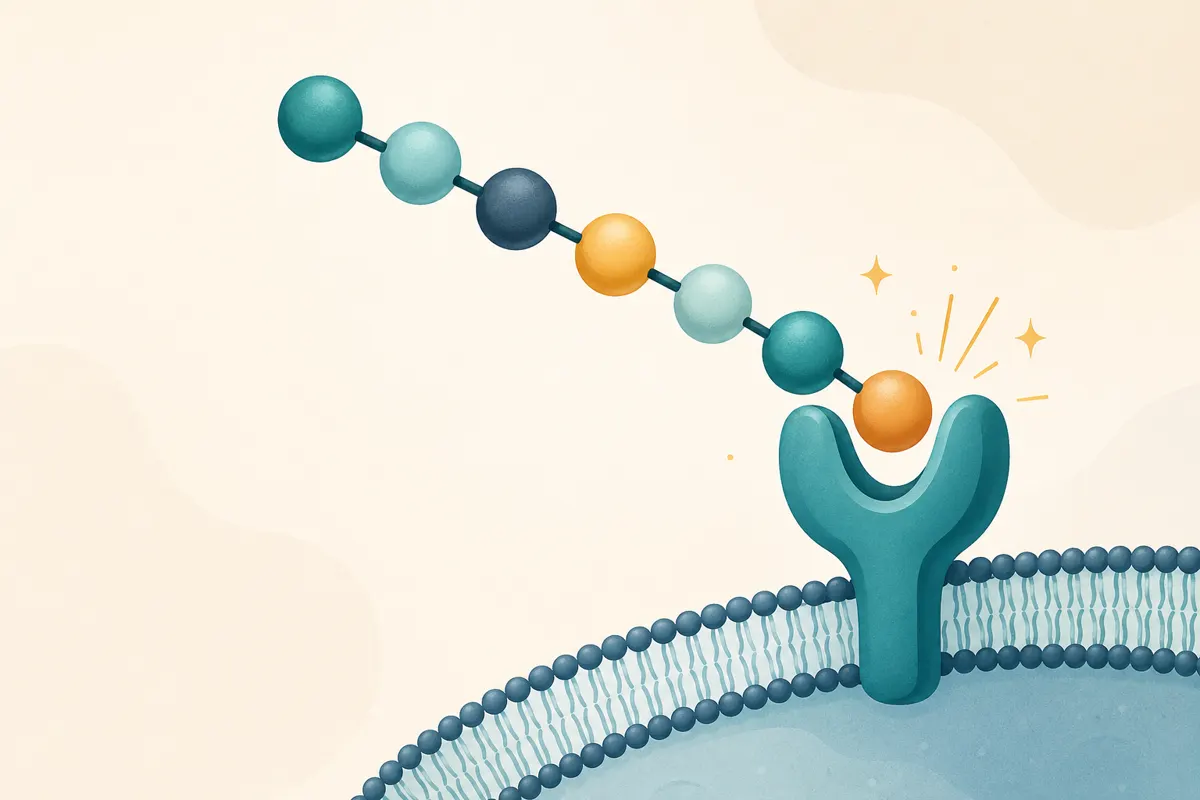
A peptide is a short string of amino acids that folds into a shape a cell recognizes.
Like a text message: a few words, but the right words in the right order get a response.
Peptides are built from amino acids—usually fewer than 50 in a row. They are small enough to synthesize in a lab, but large enough to have a specific 3D shape. That shape is what lets them find the right receptor on a cell, like a key for one lock.
Why they sit in the “Goldilocks zone” of drugs
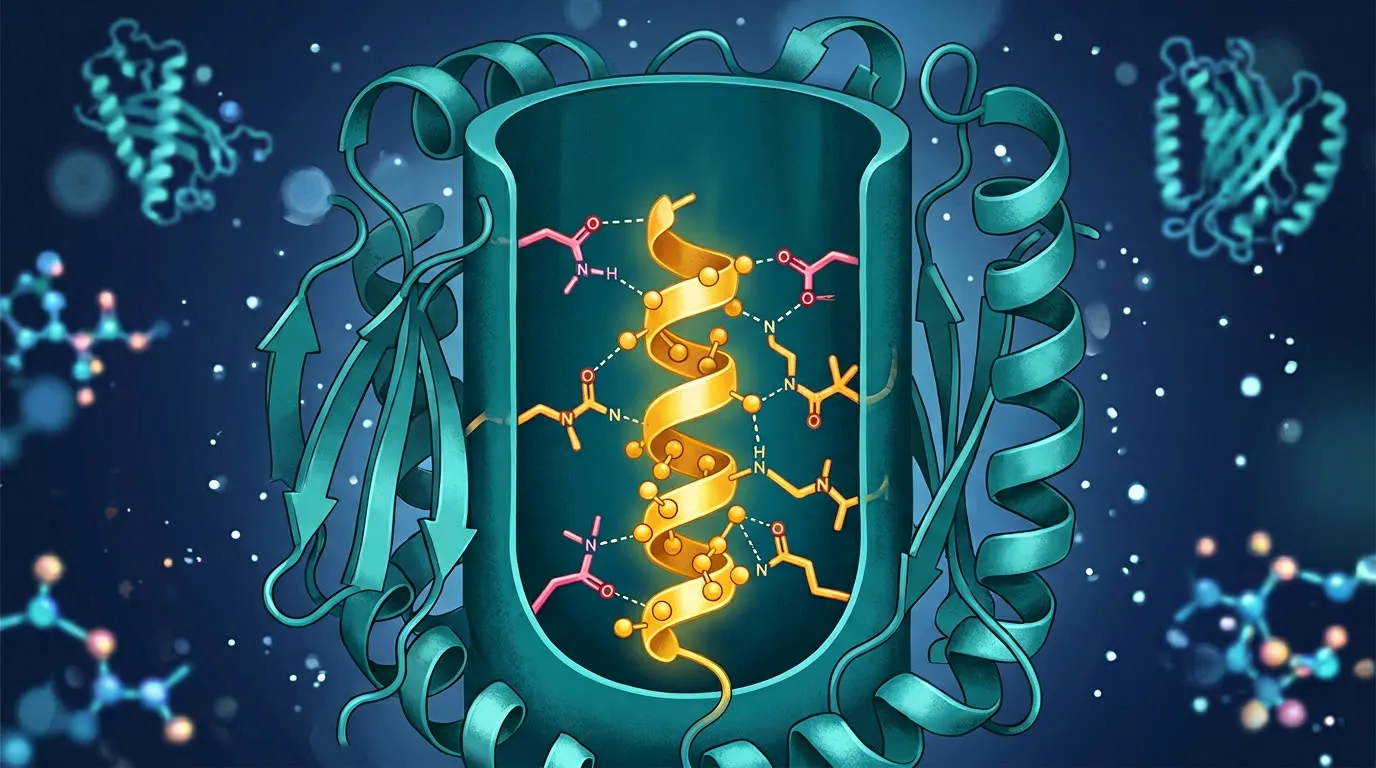
Peptides trade some stability for a sweet spot of specificity and tolerability.
Small-molecule drugs are tiny and stable but can hit more than one target. Antibody drugs are exquisitely specific but huge and complex. Peptides sit in the middle: more targeted than most pills, easier to make and modify than full-size biologics. When they break down, they often return to normal amino acids your body already knows how to handle.
How they change biology
Most approved peptide drugs mimic a signal the body already uses—insulin, GLP-1, and others work by nudging existing pathways.
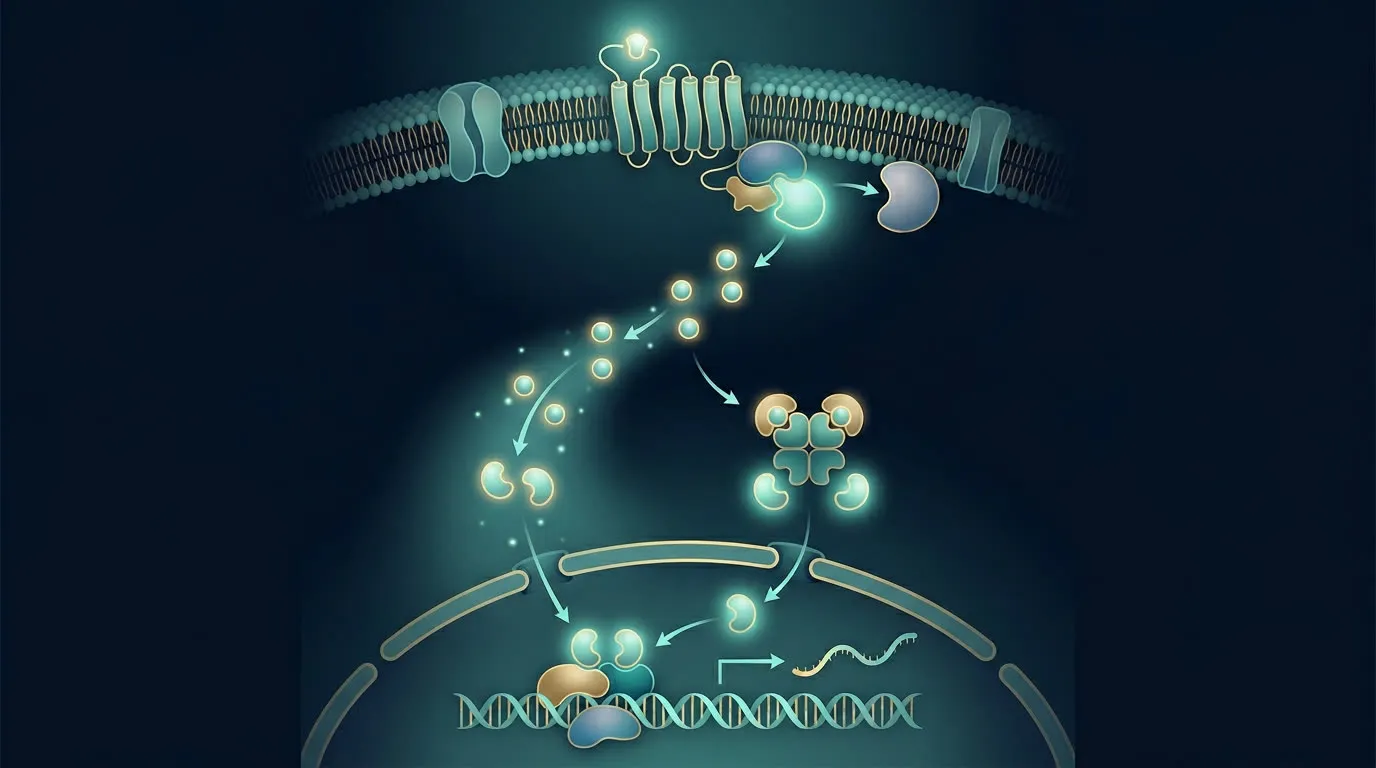
Many peptide therapies bind G protein–coupled receptors (GPCRs) or ion channels on cells. That binding flips a molecular switch: release more insulin, feel full sooner, relax a blood vessel—whatever that pathway is wired to do. The art of design is making the fake signal convincing enough to help without shouting over the whole system.